The California Subject Examination for Teachers (CSET) is a series of tests which evaluate the basic English competency and literacy skills of California's aspiring teachers. The examinations are structured into four subdivisions called subtests, and each are studied, registered for, and paid for individually. The subtests cover areas such as Reading Literature and Informational Texts as well as Language, Linguistics and Literacy, among other areas of knowledge. Those wishing to become teachers in California must achieve a CSET passing score, obtaining a score of at least 220 on each subtest.
CSET English Subtest 1 & CSET English Subtest 3 Study Guide
The CSET English Subtest 1 covers the category of Reading Literature & Informational Texts. Here, a test-taker's capacity for critical thinking, reading and interpreting literature, and connecting it with historical context are all assessed. Their general grasp of literary terms and theories is also tested. The online exam for this category is a series of 50 multiple-choice questions to be answered in an hour and 30 minutes, covering six competencies related to reading and interpreting literature.
The CSET English Subtest 3 covers Composition and Rhetoric. Here, the writing process, grammar, coherency, rhetoric, essays, and context are all covered. Test-takers are assessed in 5 different competencies related to the technical side of writing and literature, and their writing abilities are assessed and graded. The exam is given online and is comprised of two constructed-response questions for the examinee to answer in writing. The timeframe given to complete subtest 3 is two hours.
TeacherCertification.com
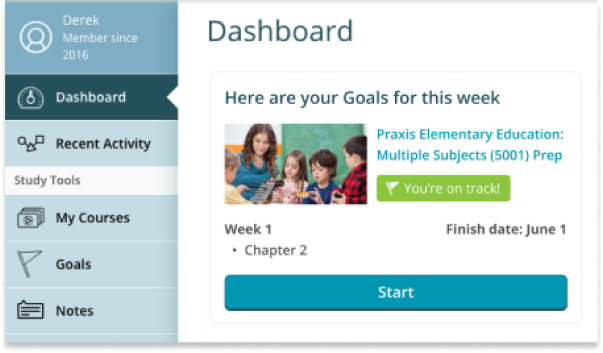
Get a personalized test prep course for the CSET English Subtests 1 & 3.
Take an assessment and focus on the areas that need the most practice.
What Skills Will Be Tested on CSET English Subtests 1 & 3?
Reading Literature and Informational Texts
The CSET English Subtest 1 covers six different competencies related to reading literature and informational texts. Among the skills assessed are a person's knowledge of different historical periods, literary movements, genres, basic elements of literature, analysis through textual evidence, summaries of informational texts, and more. Strong critical thinking skills and a well-versed literary background are what is needed to score well in this field.
Reading Literature
Here, different literary traditions are covered, such as American & British Literature, Mythology, and World Literatures. Historical periods such as medieval, gothic, romantic, modern, and others are covered, along with the themes, ideas, and topics that dominated each era. The ideas of each period can be unearthed by reading and analyzing the texts while incorporating historical context to find underlying messages. Proper citations of textual evidence are also an important aspect of this competency.
Craft and Structure of Literature
In this competency, genres are deconstructed by breaking down the differences between poetry, essay writing, novels, plays, short stories, and other types of literature. Each will be explored by probing and analyzing plot, character development, narrative voice, tone and diction, themes, and other elements of literature. Dramatic literature is compared and contrasted, such as the elements that make up comedies and tragedies. An author's point of view and credibility is also considered while interpreting text.
Reading Informational Texts
Here, one's ability to draw on textual evidence to support a point is tested. Solidifying an analysis using specific quotes from an informational or literary text is crucial to building a strong and valid thesis. The central ideas of a text can be interpreted and explored through statements found in the text.
Craft and Structure of Informational Texts
The ability to recognize underlying meanings in language are covered in this competency. The examinee will be tested on how a text's diction can convey specific messages and information. The exam will test this through questions about the use of figurative language, annotated notes, and technical meanings of words, as well as the structures that an author uses to relay information. An author's point of view and objective are also assessed by analyzing how they use language to convey a message.
Integration of Knowledge and Ideas in Informational Texts
Here, a test-taker's ability to interpret information and draw conclusions is tested. The examinee will be graded on their critical thinking skills, their ability to consume media/literature in an active vs. passive way, and how effectively they back up their findings with sources. Questions that require primary source documents to be analyzed for the author's use of rhetorical strategies, for example, may appear on the test.
Text Complexity
This competency requires test-takers to assess a text's level of complexity by noticing language clarity and how much background knowledge the text assumes the reader knows, among other factors. The levels of meaning in words and phrases are also explored while also considering how well a text can relate a certain grade or age group.
Composition and Rhetoric
This domain of the CSET English Subtest 3 focuses on evaluating oral and written competency in English and is broken down into five competencies. Writing processes, attention to grammar, using different writing applications to convey ideas, writing persuasively, parsing text, and other techniques are covered on this exam.
Writing Processes (Individual and Collaborative)
The skills needed to succeed here are mainly editorial, focusing on planning, revising, and editing drafts of work. Outlines, summaries, notes, and diagrams are all part of writing processes, along with a reflection of one's own creative process and brainstorming.
Text Types and Purposes
Here, test-takers will be evaluated on their ability to distinguish between different forms of text structures and their purpose, such as distinguishing between a narrative or an argumentative essay, what they are used for and why, and the effectiveness of the writing applications they use. Methods of developing ideas, as well as the application of rhetorical devices and techniques to maximize impact of the work, will be used.
Production and Distribution of Writing
Clear and coherent writing that reads easily and smoothly is the focus of this competency. Test-takers will demonstrate their knowledge of effective writing skills by identifying factors that make up a good sentence, such as clause-joining techniques, diction, style and tone, active and passive voice, and other methods.
Conventions of Oral and Written Language
Knowledge of English sentence structure is required here, and a sound knowledge of the written and grammatical aspects of the English language is particularly emphasized. These abilities are evaluated through testing one's knowledge of punctuation, verb tense, formal vs. informal language, and other topics.
Research to Build and Present Knowledge
A person's methods of inquiry and investigation categorize this section, which tests the ability to apply research methods, navigate databases, and identify credible sources which reference a given subject. Test-takers are also evaluated on how they make use of research materials, including the level of sophistication with which it is paraphrased, with a zero tolerance for plagiarism.
Concise, engaging video lessons
Master concepts quickly with clips from expert instructors. You get both video lessons and test transcripts.
Save time by quickly reviewing video transcripts for essential lesson information.
For Subtest 1, the 50 questions for you to answer are all in a multiple-choice format, and they will test your knowledge of any of the competencies previously mentioned. The test might ask you, for example, to identify if a given piece of poetry is a ballad or a sonnet. 40 of the questions will be in Domain I (Reading Literature and Informational Texts), and 10 of the questions will be in Domain III (Composition & Rhetoric).
Subtest 3, on the other hand, will be just two questions delivered in a constructed-response format; in other words, you will be asked to give long-form answers that demonstrate your critical thinking skills and ability to identify support through textual evidence and citations.
How Long are the CSET English Subtests 1 & 3?
Subtest 1 gives a duration of 1.5 hours for completion. Subtest 3 allows 2 hours for completion of the questions. Subtest 3 is an online proctoring test, which does not allow bathroom breaks.
CSET English Registration & Fees
The CSET English registration process can be completed online on the official website. Testing appointments can be made year-round, Monday through Saturday, and CSET test availability can also be found online. Each subtest has its own fee. Subtest 1 costs $72, and Subtest 3 costs $75. The website also states that all four subtests can be purchased together for a flat rate of $297. However, they must all be taken together in that scenario. Registration must be paid for with a debit card, a credit card, or a check.
CSET English Subtest Scoring
The passing score for each subtest is 220. Subtest 1 results are available within 5 weeks of taking the test, while Subtest 3 requires 7 weeks to obtain test results. The CSET scores are released twice a month for computer-based tests, and candidates can reference the release dates online. Online proctor test results are released once a month, and the specific release dates for each testing period can be found on the official website.
What Do I Need to Have with Me on Test Day?
For computer-based testing, report to the testing center 15 minutes before your scheduled exam. You must bring identification with you in order to be allowed to take the CSET test. No personal writing utensils will be allowed into the testing center, and you will be provided with pens upon arrival. Layers are also recommended as test center temperatures may not be in the control of the staff.
For online tests, you provide your own materials and take the test in the comfort of your own home. You must have a laptop or desktop computer, a monitor, an external mouse, a keyboard or webcam, and a government-issued photo ID in order to take the test. No one else is allowed to be in the room with you at the time of the exam.
When and Where Do I Take the CSET English Exam?
You can take the CSET English Exam year round, but you must pick a CSET schedule ahead of time. Computer-based tests are administered more frequently, while online proctoring tests are available in a week-long window each month. The computer-based tests require you to go to a testing center in your area, while the online proctoring tests can be done at home.
What Can I Do If I Fail the CSET English Exam?
If you do not pass the CSET English Exam the first time around, you can retake it 45 days after your original test date.
How Do I Prepare for the CSET English Subtest 1 & 3?
Preparing for the CSET English Subtests 1 & 3 is easier than you may think. There are many practice tests for CSET exams available online and on the official website with practice questions, in-depth responses, and step-by-step breakdowns of the material. Taking a CSET practice test for English Subtests 1 & 3 also helps you on how to construct a response and know what elements a response should have in order to be graded successfully.
The CSET English Subtest 3 examples show you exactly what kind of excerpts you can expect to be reading and drawing textual evidence from when answering the constructed-response questions. Reading through the CSET practice test and CSET study guide that are available online will give you a head start on familiarizing yourself with the structure and format of the test.
Try a Practice Test with CSET English Subtest 1 & CSET English Subtest 3 Examples
The CSET English practice questions online will prove to be a great warm-up to prepare yourself for the subtests. Actively reading through the practice test is great CSET English prep, which will have you answering questions with confidence and conviction.
Expert Contributor
Bryan McMahon, M.A. is a high school biology and special education teacher in New Jersey with over 14 years of teaching experience. He has hundreds of hours of experience tutoring aspiring teachers to take the CSET/CBEST exam suite. He has successfully passed the science and special education Praxis exams. Bryan completed a B.S. in Education from Seton Hall University and an M.A. in Teaching from Mangrove College.
Frequently Asked Questions
How long is the cset subtest 1?
The CSET Subtest 1 is a computer-based test which is 50 multiple choice questions long, and lasts a duration of 90 minutes.
Over 100,000 Video Lessons & Practice Questions - All In One Place.