Earning your teacher certificate will be easier with practice tests and
resources to help you prepare for your exam.
Select a Practice Test
What Is the CBEST?
The CBEST exam is used to gauge the aptitude of those looking to teach in California. It was developed by the Commission on Teacher Credentialing (CTC) along with input from the State Superintendent of Public Instruction and an advisory board made up of California educators. CBEST stands for California Basic Educational Skills Test, and is generally taken to fulfill the basic skills requirement for teaching credentials and permits in the state. The exam focuses on three key areas, Reading, Mathematics, and Writing, and has a section corresponding to each subject.
Should I Take the CBEST?
The CBEST exam is intended for those seeking a teaching or service credential in California or those who wish to obtain or renew a non-vocational Substitute Teaching Permit, a Provisional Internship Permit, or a Short-Term Staff Permit. The basic skills requirement only has to be satisfied for the first credential or permit, so if one goes on to pursue another credential or renew their permit they do not need to take the CBEST exam again. Out-of-state teachers who are otherwise equipped to teach in another state may be required to pass the CBEST exam to secure a credential in California. Additionally, those applying to CTC-accredited teacher preparation programs or service credential programs must also satisfy the basic skills requirement whether through the CBEST exam or via other means.
Content-wise, the exam has three major parts. The first section covers Reading and has 50 multiple choice questions. The second section encompasses Mathematics and has 50 multiple choice questions as well. The third and final section deals with Writing and gives test takers two prompts to which they must respond in essay form.
CBEST Requirements
The CBEST exam has few requirements. One is that CBEST test takers must have either a high school diploma, a GED, or another high school equivalency. The other is that CBEST exams are only given in English and that CBEST Writing test must be answered in English.
Select a Practice Test
Start Your Free Practice Test
Access thousands of practice questions so that there are no surprises on the exam
You have answered 0 out of 15 correctly.
The correct answers are highlighted with green below. Create an account to keep studying for the .
Teaching credential candidates take their CBEST exam after graduating high school or demonstrating an equivalent education. Most would-be educators register for the exam prior to or while earning their teaching degree. Taking the CBEST exam earlier can help free up one's schedule for later, though waiting until one is closer to college graduation does give the benefit of knowledge gained from teaching courses.
Those interested in registering for the CBEST exam should familiarize themselves with its contents. Following this, educators-in-training might want to pick up one or more study guides and practice tests.
CBEST Study Guides
CBEST study guides give those preparing for the exam the tools they need to maximize their efforts. These might be tips on how to form efficient studying habits or useful strategies like flashcards and mnemonics. Many study guides that are specific to one test or another will also have practice test questions. One can get an impression of how their studying is going by working through practice questions, but to get a fuller picture, one should turn to practice tests.
CBEST Practice Tests
CBEST practice tests are premade exams whose content either resembles current CBEST exams or is taken directly from older exams. Practice tests can be used to drill on concepts and topics likely to appear on the actual test or to see where one is at with their studying. Practice tests always come with answers, and by evaluating one's performance on a practice test they can see if there are areas they need to put more time into or if they are ready to take the exam.
How Is the CBEST Scored?
The CBEST exam has three sections, and each is scored on a point scale from 20-80. The Reading and Mathematics sections are scored based on the number of multiple-choice questions test takers answer correctly, while the Writing section is based on a review of test takers' two essays. Scores from each section are scaled and then added up to a total score. To pass the CBEST exam, one must receive a total score of at least 123 out of a possible 160, and each individual section score must be 37 or higher. Passing scores on individual tests carry over between attempts, thus results from different sections on separate attempts can be put toward one's total score. Sections that one has passed do not need to be taken again when test takers fail one or two other sections and later take them again. Passing CBEST test results last indefinitely. CBEST results typically arrive a week and a half to two weeks after the CBEST test dates.
The CBEST exam is broken up into three sections: Reading, Mathematics, and Writing. The first two sections, Reading and Mathematics, each consist of 50 multiple-choice questions. The Writing section has two prompts that require test takers to respond with essays. While all three sections of the CBEST exam can be taken on the same day, each section is taken in its own testing session and must be registered for separately. Test takers are allotted an hour and a half for the Reading section and for the Writing section. Two hours are given to complete the Mathematics section. Every section of the exam is weighted equally in terms of how scores from each count toward the final total.
To test these skills, the section asks test takers to examine, assess, and draw conclusions from short snippets of text from various genres. These readings can be literary or non-fiction in nature and may ask test takers to identify the author's intent, distinguish the intended audience, or weigh the facts and opinions presented against multiple-choice selections. Being able to understand how different texts can support or refute statements and arguments is critical to both learning and teaching. Research skills also come into play, and beyond the ability to think critically and use reference materials, there are also a number of questions about semantics and syntax.
These abilities are tested through basic arithmetic and algebraic equations and questions that involve imperial weights, units, and measures. The statistical portion of this section deals with averages, ratios, proportions, percentile scores, and probabilities. Test takers will also be asked to compare and interpret numbers, formulas, and mathematical expressions to graphs, charts, and other graphical representations of data. Calculators are not allowed for this or any other section of the CBEST exam.
CBEST Writing Section
Rather than having Skill Factors, the CBEST Writing is limited to two essay questions. One asks test takers to write about a personal experience, and the other prompts test takers to analyze something through their writing. Both essay questions are reviewed by qualified California educators who look for clarity, evidence or support, focus, and competency with written English.
TeacherCertification.com
Get a personalized test prep course for the CBEST.
Take an assessment and focus on the areas that need the most practice.
Those looking to take the CBEST exam have to register in advance. CBEST Registration is done online through one's CTC account. Test takers can register for an in-person computer-based exam or an online proctored exam.
Can I Take the CBEST Online?
All three sections of the CBEST exam can be taken remotely via CBEST online proctoring. To take an online proctored CBEST exam, one must use either a laptop or desktop computer with a steady internet connection. CTC advises prospective test takers to perform a system test to ensure that their hardware is capable of running the exam software come test day. Following this, one may register to take the CBEST exam. The registration process is largely the same whether one intends to take an in-person or remote test up until one schedules their exam. Rather than selecting a testing center, those interested in online proctoring will opt for a remote exam instead.
How Do I Sign Up For the CBEST?
To register for a CBEST exam, one has to log into their CTC account. Would-be educators can sign up for any combination of the three CBEST sections, though each must be registered for separately. If one is going to apply for testing accommodations, then they do so at this stage. Next prospective test takers choose what institution(s) they want their test results sent to for certification purposes and whether they want their results emailed to themselves. After this comes a series of background questions followed by a list of the testing rules. Payments are then processed for each section using a credit, debit, or check card. The last step involves scheduling the date(s) and time(s) for one's CBEST exam(s), and if one is registered for in-person testing, they also select their testing center.
How Many Times Can I Take the CBEST?
CBEST can be taken as many times as a person needs to pass. Once a section is passed it does not need to be taken again, though one might retake a section in an attempt to improve their score so that their overall score increases. Whether one passes or fails a section, they must wait 45 days before they can register for that section again.
Can I Request Testing Accommodations for the CBEST?
During the registration process, one can apply for testing accommodations. Those with one or more disabilities and those who are nursing are eligible to apply for accommodations. To receive accommodations, one has to fill out the applicable Alternative Testing Arrangement Request Form prior to choosing a CBEST schedule. Accommodations include braille testing materials for the visually impaired and the allowance of a medical device in the testing room. If one's accommodations are approved, and they are registering for a computer-based exam, they will be directed to one or more specific testing centers that can provide their alternative testing arrangement.
TeacherCertification.com
Watch concise and engaging video lessons that help with CBEST prep.
Master concepts quickly with clips from expert instructors
You get both video lessons and test transcripts
Save time by quickly reviewing video transcripts for essential lesson information
What Exams Do I Need to Pass to Become a Certified Teacher in California?
Teachers in California have to obtain a Preliminary Credential, which comes in Multiple Subject, Single Subject, Education Specialist, and other varieties. There are six steps that must be completed before one can earn their Preliminary Credential. Some of these steps can be satisfied in more than one way. Included among these is the basic skills requirement, which can be fulfilled by obtaining a CBEST passing score. To get a better sense of this step and the other five here is a rundown of the certification process.
California Teacher Certification Process
Teaching and service credentials and permits in California both come with a basic skills requirement. This is the second step in the certification process and can be satisfied by passing the CBEST exam or by passing the CSET Multiple Subject and the CSET Writing. The first step, at least for credential candidates, is earning an applicable baccalaureate degree or higher. After one has verified their basic skills, they then have to demonstrate competency in whatever subject matter areas they wish to teach. This is accomplished through passing the relevant CSET Single Subject subtests. Next, candidates must complete a college or university course on the US Constitution or pass an exam on the subject given out by an accredited college or university. Then candidates have to complete a CTC-approved teacher preparation program. The final step involves getting a formal recommendation for a credential from the teaching program's supervisor.
Once earned, Preliminary Credentials last for five years. They have to be upgraded to Clear Credentials within this timeframe for a credentialed educator to continue teaching. Two options are available for upgrading a credential: go through a Teacher Induction Program or gain certification through the National Board for Professional Teaching Standards (NBPTS). Clear Credentials normally remain valid for five years and are renewed online.
What is the Difference Between the CSET and the CBEST?
CSET and CBEST are both tests developed by the CTC. CSET stands for California Subject Examinations for Teachers. CSET has Single Subject tests that cover subject matter areas like English, Art, and Science, and the previously mentioned Multiple Subjects test. CSET and CBEST differ mostly in their scope and versatility. CBEST only deals with Reading, Mathematics, and Writing, while CSET tests cover a wide range of K-12 subjects. As for versatility, depending on the subject one wishes to teach, they can use the Multiple Subjects test and the Single Subject Writing Skills test to satisfy the basic skills requirement and the subject matter competency requirement of their credentials. Many California educators take the CBEST and one or more Single Subject tests in the course of earning their credentials. Test takers can choose which exams to take based on their subject matter strengths and their educational goals.
TeacherCertification.com
Find self-paced CBEST prep courses.
Find a study plan that can get you ready for your certification exam, whether you have six months or six days.
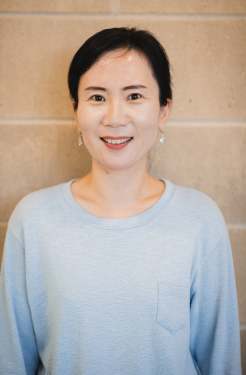
Lindsey Seril, M.Ed. has worked as a teacher for 8 years. She passed the CSET and CBEST exams while obtaining her license. Lindsey also holds Montessori teacher certifications for early childhood and elementary school. She earned her M.Ed. from St. Catherine's University and her Bachelor's degree in Liberal Studies from Sonoma State University.
Frequently Asked Questions
Is the CBEST difficult?
The chances of passing the CBEST are pretty high with the first-time passing rate at around 71%. With all exams, difficulty will vary from test taker to test taker, but the majority of those who take CBEST pass.
How much does it cost to take the CBEST?
There are different fees per service for the CBEST. Computer-based test registration is $30 per subtest, online-proctored test registration is $30 per subtest, and paper-based test registration is $41.
Expert Answers to Common Questions about cbest
How can student teachers get the most value of their teaching experiences in terms of determining which age groups, subjects, and types of school would be a fit for them?
How do you help your students best prepare to pass their teacher certification exams?
What is one piece of advice you wish you had when you were working to become a teacher?
Which classroom management strategies may be the most helpful for prospective and new teachers to learn more about?
You can read their biographies and answers below:
Hyeri Hong
Assistant Professor
I am currently an assistant professor of research and statistics in the Curriculum and Instruction Department in Kremen School of Education at California State University, Fresno. I am from South Korea. I received my B.A. in English Education from Korea University and worked as a middle and high school teacher in Korea. I worked in high poverty schools and saw that many of my students suffered from hunger and mental and physical abuse, so from that time, I have been very interested in equity issues. Then, I earned my Ph.D. in Educational Measurement and Statistics from University of Iowa. My research interests include advanced statistics such as structural equation modeling, Bayesian estimation, and causal inference. I am also very interested in the effects of testing policy on teacher, teaching, and student learning. Currently, I am teaching ERE 220 Research in Education, ERE 289 Statistical Modeling and will teach ERE 220 Research in Education and CI 298 Master's Project this coming spring semester. I am also serving on Kremen School Equity Committee and will work to promote equity and diversity on campus.
How can student teachers get the most value of their teaching experiences in terms of determining which age groups, subjects, and types of school would be a fit for them?
It is really hard to tell. When I was a university student, actually I did not want to be a teacher. I got pushed by my parents to major in English Education because they thought teaching is a good job for women (stereotype). However, when I got a teacher job in a high school, I knew that this is the right job for me. I loved students and enjoyed talking, interacting with, and working with them. I never taught elementary students. 7th graders were like babies to me (They do not listen to me often), so bigger kids such as 9th graders to 12th graders were right age groups to me because we can communicate well and sometimes they also listen to me. Some teachers may not like to work in low-income schools, but I felt rewarded there because I could really help my students achieve better. I helped them go to a good high school and get scholarship (we have a high school entrance exam). My advice is just to try and experience whatever (don't be afraid of adventures) and find the right age group and types of schools that will fit for you.
How do you help your students best prepare to pass their teacher certification exams?
Well, I do not teach the course that helps prepare students to pass their teacher exams. I am teaching Master's students Research and statistics courses.
What is one piece of advice you wish you had when you were working to become a teacher?
Love your students first! Love teaching and interacting with students. I felt that if I love my students, my job as a teacher is very fun. Listen to them and be patient with them. Have fun in the classroom.
Which classroom management strategies may be the most helpful for prospective and new teachers to learn more about?
Classroom management is really challenging. I cried almost everyday during the first month of my high school teaching. At the time I was only 22 and my students were 18. haha, How awful! Teenagers are rebellious. Don't cry. Never show your tears to your students. :) Use polite language and maintain eye contact with students. Respect them in the classroom, but set the strict guidelines and rules. I tried to be very strict in the classroom (It is hard to handle teenagers), but I was like an older sister and friend outside the classroom. I talked with them a lot and listened to their concerns. I also openly communicated with parents a lot. I also offered a lot of praises and rewards when students did a good job, but addressed inappropriate behaviors quickly and talked with the students in private.
John Pascarella III
Professor of Clinical Education
Dr. John Pascarella III is a Professor of Clinical Education in the Rossier School of Education and Chief Academic Officer of the Race and Equity Center at the University of Southern California. He is a nationally known expert in teacher education reform, racial equity, and digital media literacy who has influenced state policymakers, university leaders, deans, program directors, superintendents and K-12 district leaders to enact reforms that have improved the preparation of teachers and principals, increased access to information technology services and equipment, and advanced racial equity initiatives in K-12 schools, community colleges, and universities serving historically underserved students. Prior to his appointments at USC, Dr. Pascarella taught English Language Arts and Literature in urban New Jersey high schools and served as an Adjunct Professor at Montclair State University, a Course Lecturer at McGill University, and a Visiting Researcher at the University of KwaZulu-Natal. He earned his Ph.D. in Culture and Values in Education from McGill University, an M.A. in Teaching from Montclair State University, and a B.A. in English Literature and African American Studies from the University of Central Florida.
How can student teachers get the most value of their teaching experiences in terms of determining which age groups, subjects, and types of school would be a fit for them?
Research the school community to learn more about the racial, cultural, linguistic, and economic backgrounds of the students and families the school serves. What can you learn about the school's history, its relationship with the community, and how the school reflects the community's values, beliefs, and priorities. Critically analyze school data including enrollment, attrition, student-teacher ratios, achievement data, percentage of dual language learners, and other publicly available information. Resist deficit views of students and determine how the school views students' success as a shared responsibility among educators, students, and families. Talk to school leaders, teachers, parents/caregivers, and students to learn more about their experiences of schooling, partnering, and succeeding. You might ask yourself: What kinds of relationships do these groups have with each other? How do these relationships support equitable and meaningful learning opportunities for students? What are my values, beliefs, and assumptions about the students and the relationships they have with educators at this school? How do I see myself meaningfully participating in these relationships? Am I willing to question my assumptions and learn from mistakes I will make in learning to teach in this school community?
How do you help your students best prepare to pass their teacher certification exams?
Learn the science of the exam and focus on building your assessment literacy by investigating the discrete components or 'tasks' of the assessment. Practice generating reflective memos on the instructional planning decisions you make in everyday lessons. Consider how those decisions are linked to your knowledge of students, your knowledge of curriculum content, and the central focus of your unit of study. How do you know what you know about the students, their knowledge and skills, and their learning progress (as individuals, clusters, and whole groups)? Consider how the certification assessment reflects the planning, instruction, and assessment practices of well-prepared teachers. With your deeper knowledge of the assessments' tasks, purposes, and content requirements, backwards plan a timeline that includes practicing what's required (e.g., writing up comprehensive lesson plans, drafting narratives in response to questions/prompts, or filming lesson segments and analyzing evidence of learning), workshopping drafts with peers, and generating questions to ask your teacher educators or program staff (after carefully reviewing the assessment handbook and other related resources). You might ask: What do faculty and staff know about which sections of the assessment have higher no-pass rates? What do they know about the common problems teacher candidates encounter on these assessments?
What is one piece of advice you wish you had when you were working to become a teacher?
Take time to reflect on the conditions you need to learn and thrive during this incredibly time-consuming and energy-demanding preparation. Generate a priority list, talk to admissions counselors or program advisors and 1) determine how those needs can best be met with the program's assistance, 2) identify which personal, family, or social obligations can reasonably be met while meeting the demands of your student teaching practicum, and 3) follow-through on maintaining the priorities you set for yourself. Throughout this process, build meaningful relationships with your program staff, faculty, and the school site staff with whom you'll be working to successfully complete your preparation program. Regularly revisit your priorities with them and seek their guidance. You might ask yourself: Can you reasonably expect to keep a part-time job while attending classes and completing a full-time student teaching practicum? How much time should you expect to spend planning and preparing lessons in the evenings and on weekends? How much and what kind of grading should you expect to encounter? What other obligations, such as meeting parents/caregivers, attending department meetings, or going to professional development workshops, will be expected of me? What are my own professional learning goals for this phase of my preparation?
Which classroom management strategies may be the most helpful for prospective and new teachers to learn more about?
Build meaningful relationships and rapport with students over time, who they say they are, how they experience school/teachers/peers, what they value about the subject matter, why they like certain classes more than others, and who they turn to for support when they are seeking to develop their academic knowledge and skills. Consider how what you learn through building relationships can inform how you practice offering high support, maintaining high expectations, and differentiating instructional moves and assessment tools. Observe teachers at your school who have the strongest rapport and learning experiences with students. What can you learn from them? Would they be willing to observe you and office feedback? Consider these questions: Do you center your students in their learning and involve all learners of diverse identities, backgrounds, and abilities? Do you encourage and co-facilitate student-initiated discussions? Do you incorporate students' prior knowledge, their current academic and non-academic interests, and/or their talents/skills from other academic disciplines? Do you offer students opportunities to co-teach with smaller groups or the entire class? How does the physical space of the classroom environment include visual artifacts that: reflect the cultural, linguistic, and racial diversity of your students; that stimulate and extend learning; and/or promote further inquiry/exploration? How does the setup of your classroom reflect your investment in them, their belonging, and their learning with you/each other?
Over 100,000 Video Lessons & Practice Questions - All In One Place.